
Ready to dive into the world of darts but don’t know where to start? You’re in the right place.
Whether you want to impress friends at your next game night or take your skills to the next level, learning the basics is key. This guide will walk you through everything you need—from choosing the perfect darts to mastering your throw.
By the end, you’ll feel confident stepping up to the oche and aiming for that bullseye. Keep reading, and let’s get your darts journey rolling!

Darts Basics
Darts is played by throwing darts at a round board. Each player throws three darts per turn, called an inning. Players aim to score points by hitting numbered sections on the board.
The scoring system uses numbers from 1 to 20 and special areas like the bullseye. The outer ring scores double points, the middle ring scores triple points, and the bullseye scores the highest points. Players subtract their score from a starting number, usually 501, trying to reach exactly zero.
| Common Terms | Meaning |
|---|---|
| Inning | One turn with three throws |
| Bullseye | The center of the board, worth 50 points |
| Double | Outer ring, doubles the number hit |
| Triple | Middle ring, triples the number hit |
| Checkout | Finishing the game by reaching zero points |
Choosing Your Darts
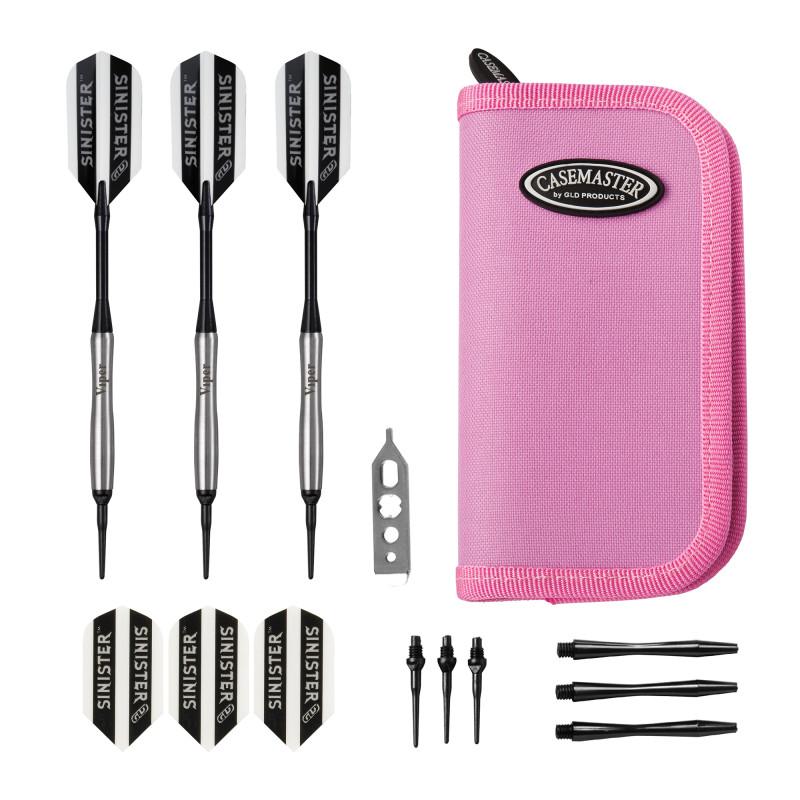
Weight affects how the dart feels and flies. Most beginners choose darts weighing between 18 to 24 grams. Lighter darts offer more control, while heavier darts help with stability.
Balance means how weight spreads along the dart. Balanced darts feel steady in your hand and fly straight. Try different types to find what suits you best.
| Barrel Shape | Description |
|---|---|
| Straight (Pencil) | Simple, easy to grip, good for beginners. |
| Knurled | Textured grip, helps prevent slipping. |
| Torpedo | Tapered shape, fits fingers comfortably. |
Tungsten darts are thinner and last longer. They feel better but cost more. Brass darts are cheaper but thicker and wear out faster.
Flights affect the dart’s path. Standard flights give stability and control. Shafts come in different lengths; standard shafts are good to start with.
Essential Equipment
A quality dartboard is the center of the game. Choose a standard bristle board for durability and good play. Electronic boards suit casual fun but lack tournament feel. Check the board’s size; a regulation board is 18 inches wide.
The oche is the line you stand behind. It should be marked clearly and set at 7 feet 9 and 1/4 inches from the board. Surrounds protect walls from stray darts. They also catch missed throws, saving your walls from damage.
Proper storage and maintenance keep equipment lasting longer. Store darts in a case to protect tips and flights. Rotate the dartboard regularly to avoid uneven wear. Clean the board gently with a dry cloth to remove dust. Replace flights and shafts when worn out for better accuracy.

Proper Throwing Technique
Grip styles vary but the most common is the three-finger grip. Hold the dart lightly with your thumb, index, and middle finger. Avoid squeezing too hard to keep control and allow smooth release.
Stance and positioning are key. Stand with your dominant foot forward, pointing at the board. Keep your body steady and balanced. Your weight should be mostly on the front foot, but not too tense.
Arm and wrist movement should be smooth and controlled. Keep your elbow up and level with your shoulder. Use your forearm to throw the dart, and keep your wrist firm but relaxed. Avoid flicking your wrist too much.
Practice Routines
Target drills help improve your aim by focusing on specific board areas. Try hitting the bullseye or triple 20 repeatedly. Practice hitting different numbers in a set order. This builds muscle memory and sharpens focus.
Consistency exercises train your throwing motion. Throw darts with the same grip and stance each time. Keep your elbow steady and follow through smoothly. Repeating the same action builds accuracy and confidence.
Tracking progress is key to improvement. Use a simple chart or app to record scores. Note which targets you hit and miss. Check your scores weekly to see growth. Adjust your practice based on weak spots.
Common Mistakes To Avoid
Over-gripping the dart can cause poor throws and hand strain. Hold the dart lightly but firmly. A tight grip blocks smooth release and accuracy.
An unstable stance affects balance and aim. Keep feet shoulder-width apart and stand steady. Avoid shifting weight during throws to maintain control.
Inconsistent release leads to erratic dart flights. Practice letting the dart go at the same point in your motion every time. Smooth release improves precision and confidence.
Tips For Improving Accuracy
Focus techniques help improve your dart accuracy. Keep your eyes on the target and block out distractions. Try to keep your head still and steady. This helps your arm move smoothly and hit the mark.
Breathing control is very important. Take slow, deep breaths before throwing. Calm breathing lowers stress and helps your hand stay steady. Holding your breath or quick breathing makes your throws shaky.
Visualizing targets means imagining the dart hitting the exact spot. Picture the dart flying straight and landing where you want. This mental practice builds confidence and improves aim. Think about the bullseye or triple 20 before you throw.
Where To Buy And Try Darts
Local dart shops offer a great chance to try different dart sets. You can hold and feel various weights and shapes. Staff often give advice based on your skill level. Testing darts before buying helps find a comfortable grip and weight.
Online retailers have a wide range of darts, including beginner sets. They often provide detailed descriptions and customer reviews. Some sites offer bundles with boards and accessories. Delivery is convenient, but you cannot test darts before purchase.
| Feature | Recommended Choice |
|---|---|
| Weight | 18-22 grams |
| Barrel Shape | Straight or pencil style |
| Grip | Simple ring grip |
| Material | Tungsten or brass |
| Flights | Standard shape |
| Shafts | Standard length |
Joining The Dart Community
Joining a dart community can make learning more fun and social. Local leagues offer a great way to meet players of all skill levels. They usually meet weekly and welcome beginners warmly. Playing regularly helps improve your skills and confidence.
Online forums are perfect to ask questions and share tips. You can find advice on techniques, dart choices, and rules. These forums connect you with players worldwide, offering support anytime.
Tournaments and events provide chances to watch and play competitively. They help you experience the excitement of real matches. Many events have beginner categories, making them less intimidating to join.
Frequently Asked Questions
How Do You Play Darts For Beginners?
Hold the dart with a comfortable grip. Aim at the board steadily. Throw with a smooth arm motion. Score points by hitting target sections. Practice regularly to improve accuracy and consistency.
How Should A Beginner Practice Darts?
Begin practicing darts by standing still with feet firm. Grip the dart steadily. Align your elbow with your shoulder. Bring the dart back comfortably near your eye. Move only your arm from elbow to hand while throwing consistently.
What Darts Should A Beginner Get?
Beginners should choose 20-21 gram tungsten or brass darts with straight barrels. Use standard flights and shafts for stability and control. Select darts offering a comfortable grip and try them at local shops or online to find the best fit for your style.
Is Darts Difficult To Learn?
Darts is easy to learn with basic practice. Focus on grip, stance, and aim to improve quickly. Consistency builds skill fast.
Conclusion
Starting darts is easier than you think. Choose simple darts with a comfortable grip. Practice your stance and throw slowly, focusing on consistency. Play with friends or join a local group to learn faster. Keep sessions short but regular to build skill and confidence.
Enjoy the process and celebrate small improvements. Darts offers fun and challenge for everyone at any age. Give yourself time, stay patient, and keep aiming for progress. Your darts journey begins with each throw—just keep playing.