
If you love playing darts, you know how important a good dartboard is to your game. But have you ever wondered how often you should rotate your dartboard to keep it in top shape?
Rotating your board isn’t just a small detail—it can make a big difference in how long your board lasts and how well it performs. If you want to avoid worn-out spots, keep your throws accurate, and get the most out of your dartboard, understanding the right rotation schedule is key.
Keep reading, and you’ll discover simple tips that can save you money and improve your game every time you step up to throw.

Dartboard Wear Factors
Usage frequency greatly affects how fast a dartboard wears out. The more you play, the quicker the board gets damaged. Quality and material matter too. Boards made from high-quality sisal last longer than cheap ones. Player skill influences wear. Hard throws can cause more damage than gentle throws. Maintenance is key. Regularly rotating the board helps spread out the wear evenly. This prevents one area from getting worn down too fast. Keeping darts sharp also protects the board. Dull tips tear the fibers more. Checking and replacing damaged dart points helps keep the board in good shape.
Benefits Of Rotating
Rotating a dartboard helps in preventing uneven wear. Constant hits on the same spots cause those areas to wear out faster. By turning the board, the impact spreads evenly across the surface. This keeps the board looking and feeling fresh.
The fiber healing process is important. Sisal fibers close up after darts are removed. Rotating the board lets each part rest and recover. This keeps the surface tighter and less damaged.
Extending board lifespan saves money. Regular rotation reduces deep holes and tears. The board stays playable for a longer time. This means fewer replacements and better value for players.
Rotation Frequency Tips
For daily use, rotate your dartboard about once a week. This helps spread out the wear on the board evenly. If you use it less, rotating every two to three weeks is enough.
Boards used by casual players need less frequent rotation. Just a small turn keeps the board in good shape. For heavy use, rotate more often to avoid deep holes in one spot.
Professional players often rotate their boards after each game. They want the board to last and stay fair. This practice also keeps the scoring areas fresh and balanced.
How To Rotate Properly
Start by gently removing the number ring to avoid damage. Use a flat tool or your fingers to lift it carefully. This ring holds the numbers in place and must come off before rotating.
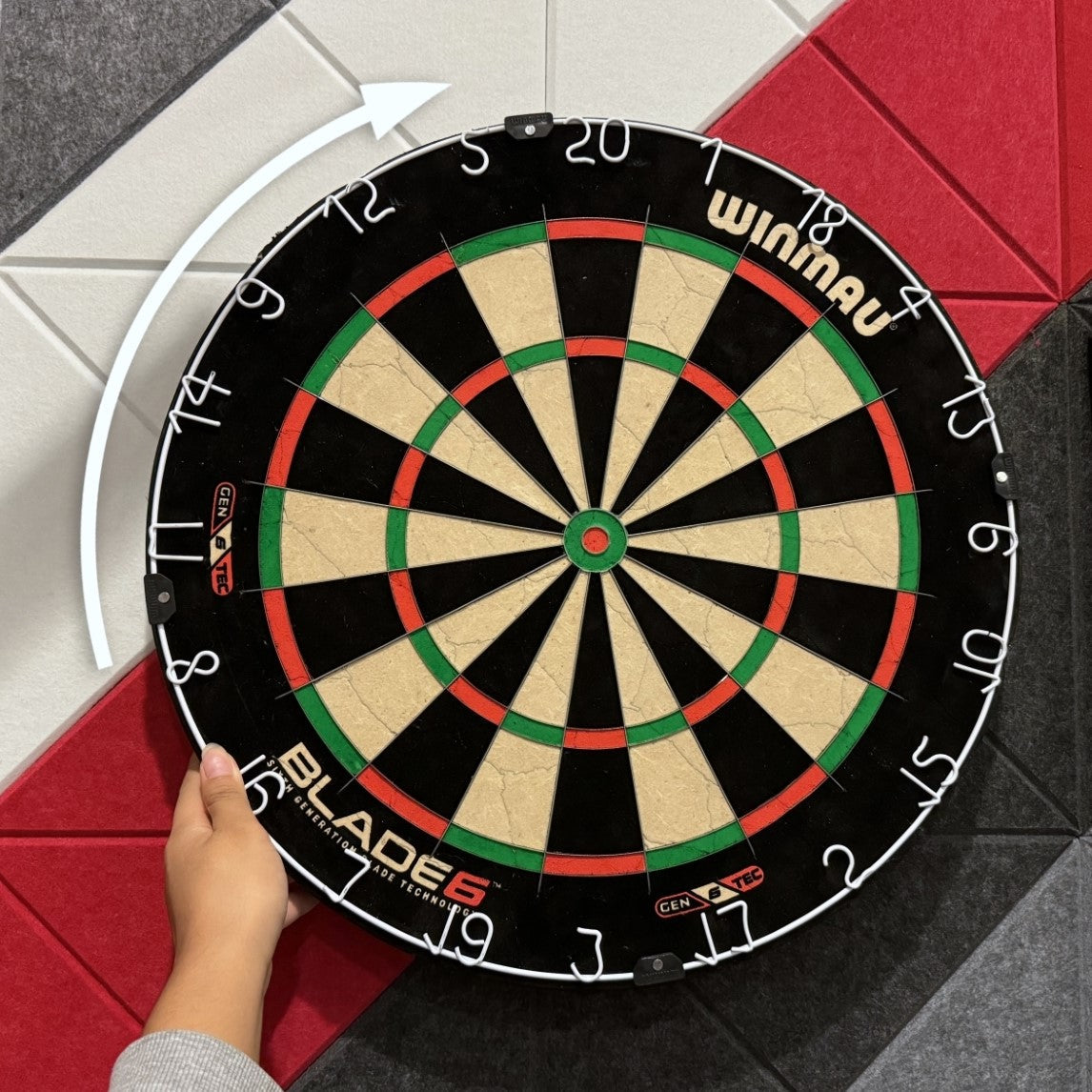
Rotate the dartboard by moving it a few segments clockwise or counterclockwise. This helps spread out wear and tear on the board. Rotating every week is best if you play often.
Once rotated, reattach the number ring securely. Make sure it fits tightly to keep the numbers from moving during play. Press it down evenly around the board’s edge.
Additional Maintenance Tips
Sharpening dart tips helps darts stick better and protects the board. Use a small file or sharpener to keep tips smooth and pointed. Check tips often for damage.
Replacing damaged darts is important. Bent or broken darts can harm the board and affect your throw. Swap out any darts that look worn or bent.
Avoiding common mistakes keeps the board in good shape longer. Don’t throw darts too hard or at the same spot every time. Rotate the board regularly to spread wear evenly.

When To Replace Your Board
Signs of irregular wear include deep holes and frayed sisal fibers. The board’s surface may look uneven or faded in certain sections. These signs show that the board no longer catches darts well, leading to frequent bounce-outs. Uneven wear can cause scoring errors and frustrate players.
Impact on gameplay is clear when worn areas affect dart placement. Darts may slip or fall more often, ruining a good throw. The scoring can become unreliable, making the game less fun. A fresh board keeps the game fair and enjoyable for everyone.
| Choosing a New Dartboard | Considerations |
|---|---|
| Material | Sisal fiber is best for durability and self-healing |
| Size | Standard boards are 18 inches in diameter |
| Price | Higher quality boards cost more but last longer |
| Number ring | Look for a thin, rotatable ring to extend life |
Electronic Vs Sisal Boards
Electronic dartboards are made with plastic segments and sensors. They tend to last longer without needing much rotation. Sisal boards, made from compressed fibers, wear out faster in popular scoring areas. Rotating a sisal board helps even out wear and extends its life.
Maintenance for electronic boards is mostly about keeping sensors clean and dry. Sisal boards require more care, like keeping them dry and avoiding damaged darts. Rotating sisal boards every few weeks is important, but electronic boards rarely need rotation.
| Feature | Electronic Board | Sisal Board |
|---|---|---|
| Durability | High, less prone to damage | Lower, fibers wear with use |
| Maintenance | Sensor cleaning | Keep dry, rotate often |
| Rotation Need | Rarely needed | Rotate every few weeks |
Common Dartboard Myths
Leaving darts in the board does not mean you must rotate it immediately. Some believe leaving darts causes holes to enlarge quickly. This is partly true. The holes stay open longer if darts remain stuck. But the board itself won’t wear unevenly just because of this.
Rotation frequency myths say you must rotate the board after every game. Actually, rotating once a week or when certain segments look worn is enough. Over-rotating can confuse players and wear out the mounting system.
It’s smart to remove darts after each turn. This helps the board recover and keeps the fibers tight. Leaving darts stuck for hours or days may harm the board’s surface more than rotating it often.
Frequently Asked Questions
How Often Should You Rotate A Dart Board?
Rotate your dartboard weekly by a few segments to evenly distribute wear and extend its lifespan.
What Is The Lifespan Of A Dartboard?
A dartboard typically lasts 1 to 3 years with regular use. Rotating it weekly and keeping darts sharp extends its lifespan. High-quality boards and gentle throws also improve durability. Frequent play or hard throws wear it out faster. Proper care ensures longer, consistent performance.
How Often Should You Change A Dartboard?
Change your dartboard every 1 to 3 years, depending on usage and wear. Rotate it weekly to extend its life. Keep darts sharp to prevent damage. Replace the board sooner if holes or fibers deteriorate significantly. Regular maintenance helps maintain optimal play quality.
Is It Bad To Leave Darts In The Dart Board?
Leaving darts in the board can damage fibers and cause uneven wear. Remove darts promptly to extend your board’s life. Rotate the board regularly for even use and better durability.
Conclusion
Rotating your dartboard helps spread wear evenly. Aim to rotate it weekly if you play often. This simple step keeps your board in good shape longer. Sharp darts also protect the board’s surface. Regular rotation lets the sisal fibers heal well.
Small efforts make a big difference in board life. Enjoy more games without needing a new board soon. Keep your play smooth and your board lasting. Rotate smartly and watch your dartboard stay fresh.