
If you’ve ever picked up a dart or watched a game, you might have wondered, “How do darts scores work?” Scoring in darts isn’t just about hitting the board—it’s a smart system that keeps the game exciting and competitive. Understanding how points add up and what each section of the board means can change the way you play and enjoy the game.
Whether you’re a complete beginner or just curious about the rules, this guide will break down everything you need to know about darts scoring in simple, clear terms. Ready to become the player who always knows their score? Let’s dive in and make every throw count!
Dartboard Layout
The dartboard is divided into 20 numbered sections, each with a different score. These numbers run from 1 to 20, arranged in a fixed order. Each section contains three scoring areas: single, double, and triple.
The single area scores the number shown on the board. The double ring, the thin outer circle, scores twice the number. The triple ring, the thin inner circle, scores three times the number.
The center of the board has two parts: the bullseye and the outer bull. The bullseye is the small red circle in the middle, worth 50 points. The green ring around it is the outer bull, which scores 25 points.
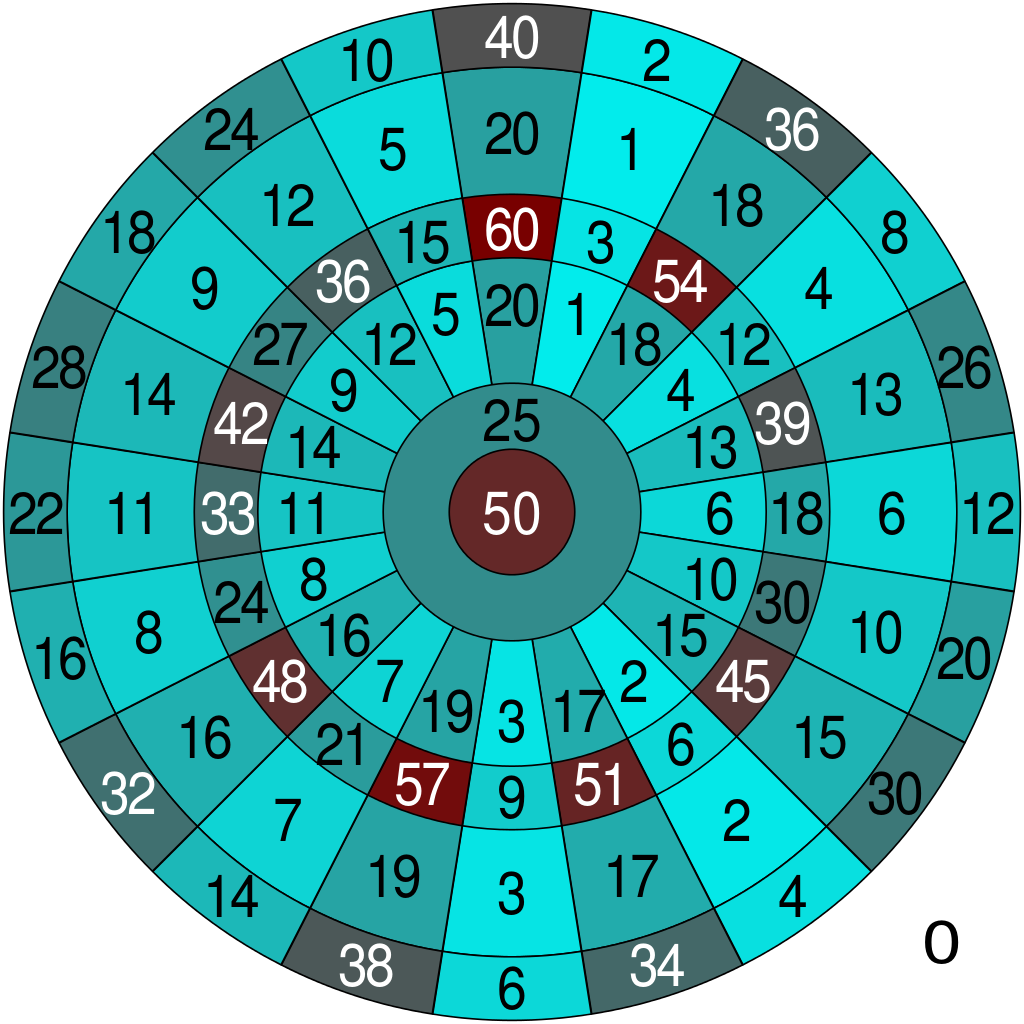
Credit: cavalierdarts.com
Basic Scoring Rules
Each player starts with a set score, usually 501 points. The goal is to reach exactly zero by subtracting points scored each turn.
Players throw three darts per turn. Each dart’s score depends on where it lands on the board. The board has sections worth 1 to 20 points, plus special areas like the bullseye.
Points from all three darts are added together. This total is then subtracted from the player’s current score. The new score shows how many points remain.
A player must hit exactly zero to win. If a player’s score goes below zero, that turn does not count, and the score stays the same.
Game Formats
A leg is a single game in darts. Players start with a set score, usually 501, and take turns throwing darts. The first player to reach exactly zero wins the leg. Legs are the basic units of scoring and competition.
A set is made up of several legs, often best of five legs. The player who wins the most legs first wins the set. Sets add a higher level of challenge and strategy.
Match structures vary by tournament. Some matches use a best-of-5 sets format, while others use best-of-7 or best-of-9 sets. This changes how long matches last and how players pace themselves.

Credit: www.shotdarts.com
Winning The Game
To win a darts game, a player must finish on a double. This means the final dart must land in the double ring, which scores double points.
The exact score needed to reach zero must be hit. For example, if a player has 40 points left, they must hit double 20 to win.
If a player scores more than the points left, it is called a bust. Their turn ends immediately, and the score returns to what it was before that turn.
Common Scoring Strategies
Maximizing triples is key to scoring high in darts. The triple ring triples the number hit. Targeting triple 20 scores 60 points, the highest on the board. Consistent hits here boost your total quickly.
Aiming for the Bullseye can also earn big points. The bullseye has two parts: outer (25 points) and inner (50 points). Hitting the inner bullseye is tough but rewarding. It’s good for finishing a game or adding a big score.
Reducing score efficiently means planning your throws. Aim for numbers that help reach zero exactly. Avoid leaving scores that are hard to finish. Good players think ahead to make the best moves.
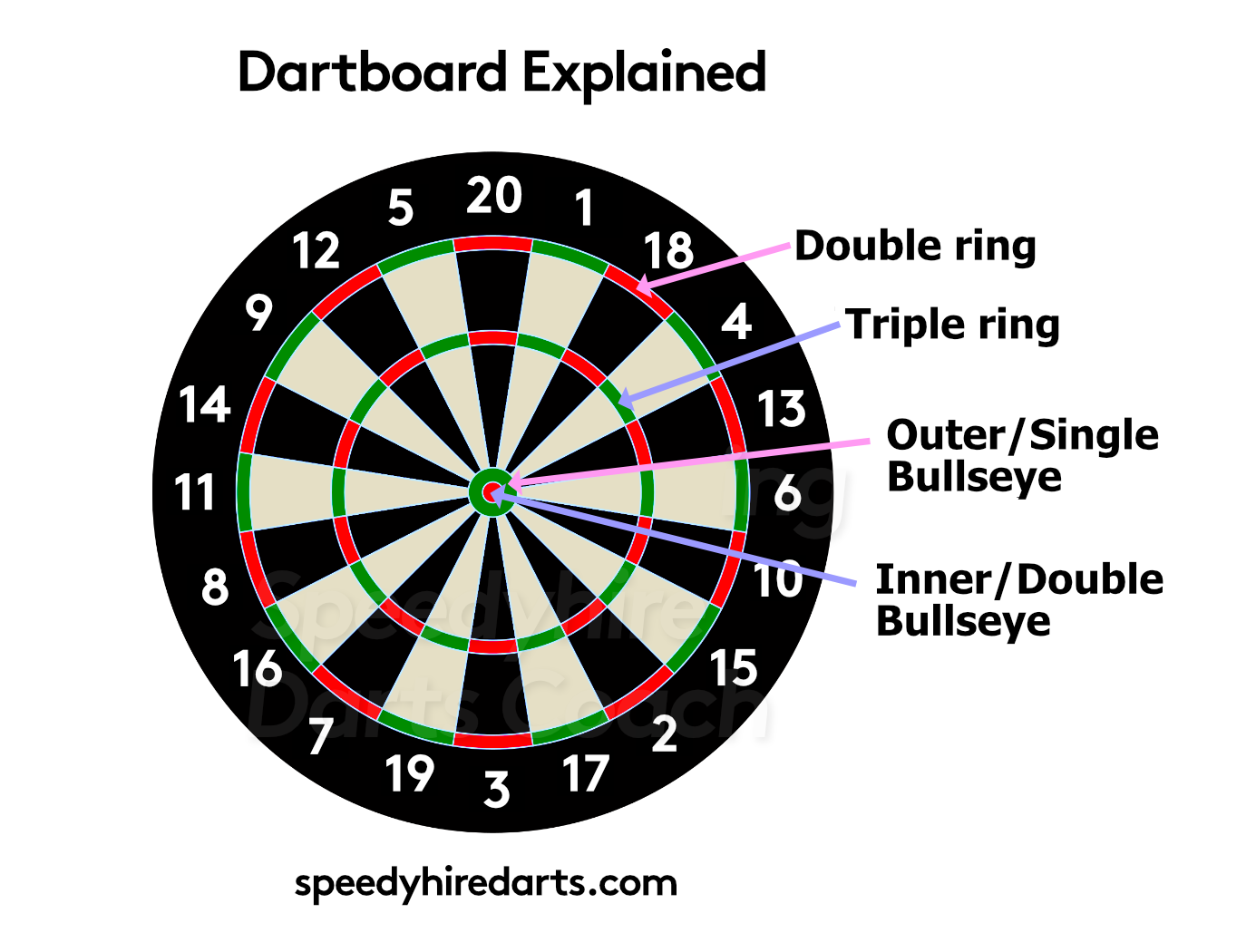
Credit: speedyhiredarts.com
Advanced Scoring Concepts
Checkouts are the final darts thrown to reach exactly zero points. Players must hit a double or the bullseye to finish the game. Planning the right combination of numbers helps set up easier finishes in later turns.
Common combinations include finishing on doubles like 16 or 20. Players often aim to leave themselves a preferred double for the next throw. This strategy improves the chance to win quickly.
Setting up finishes means aiming to leave a simple number for the final double. For example, leaving 32 is good because it is double 16, a popular target. Good players think ahead about these numbers.
Tiebreaks happen if players score the same in a match. A sudden death leg is played to decide the winner. The first player to finish that leg wins the game immediately.
Tracking Scores
Manual scorekeeping uses a paper and pencil to track scores. Players write down each score after every turn. This method needs focus and accuracy to avoid mistakes. It is simple but can be slow during fast games.
Electronic scorers show scores on a screen automatically. They save time and reduce errors. Some models offer extra features like game modes and sound effects. Easy to use for beginners and experts.
Quick mental math helps keep the game moving. Adding and subtracting scores fast is key. Practice adding numbers like 60, 45, or 32 in your head. This skill makes score tracking smoother and more fun.
Frequently Asked Questions
How Many Sets Is A Win In Darts?
A win in darts usually requires winning a predetermined number of sets. For example, early rounds may need best of five sets. Later rounds often require best of seven or nine sets. The exact number depends on the tournament and match stage.
Is The Darts Final First To 7 Sets?
The darts final format varies by tournament. Some finals are first to 7 sets, while others differ. Check specific event rules.
How Is Darts Scoring Sets And Legs?
A leg is a single game where players reduce their score to zero first. A set consists of several legs, usually best of five. Players win sets by winning the required number of legs. Matches are decided by winning a predetermined number of sets.
What’s The Highest Score On A Dartboard?
The highest score on a dartboard with three darts is 180 points. This is achieved by hitting three triple 20s.
Conclusion
Understanding darts scoring helps you enjoy the game more. Each turn, players throw three darts and subtract points. The goal is to reach exactly zero, ending on a double. Knowing sets and legs adds to the fun and strategy. Keep practicing simple scoring to improve your play.
Soon, counting points will feel natural and quick. Darts is a game of skill and focus. Enjoy every match with confidence in scoring rules.