
Have you ever watched a game of darts and wondered how the scoring really works? Understanding darts scoring might seem tricky at first, but once you know the basics, it’s actually quite simple—and can make your game a lot more fun.
Whether you’re aiming to beat your friends or just want to follow along during a match, knowing how to keep score is key. You’ll discover exactly how scoring in darts works, step by step. By the end, you’ll feel confident tracking points, knowing when you’re close to winning, and mastering the rules that make darts exciting.
Ready to become a scoring pro? Let’s dive in!
Basic Scoring Rules
Each player throws three darts per turn. The points scored by all three darts are added together to get the round score. This total is then subtracted from the player’s current score.
The goal is to reach exactly zero. Scoring below zero means the turn is lost, and the previous score stays. The last dart must land in a double area or the bullseye to finish the game.
Double And Bullseye Finishes
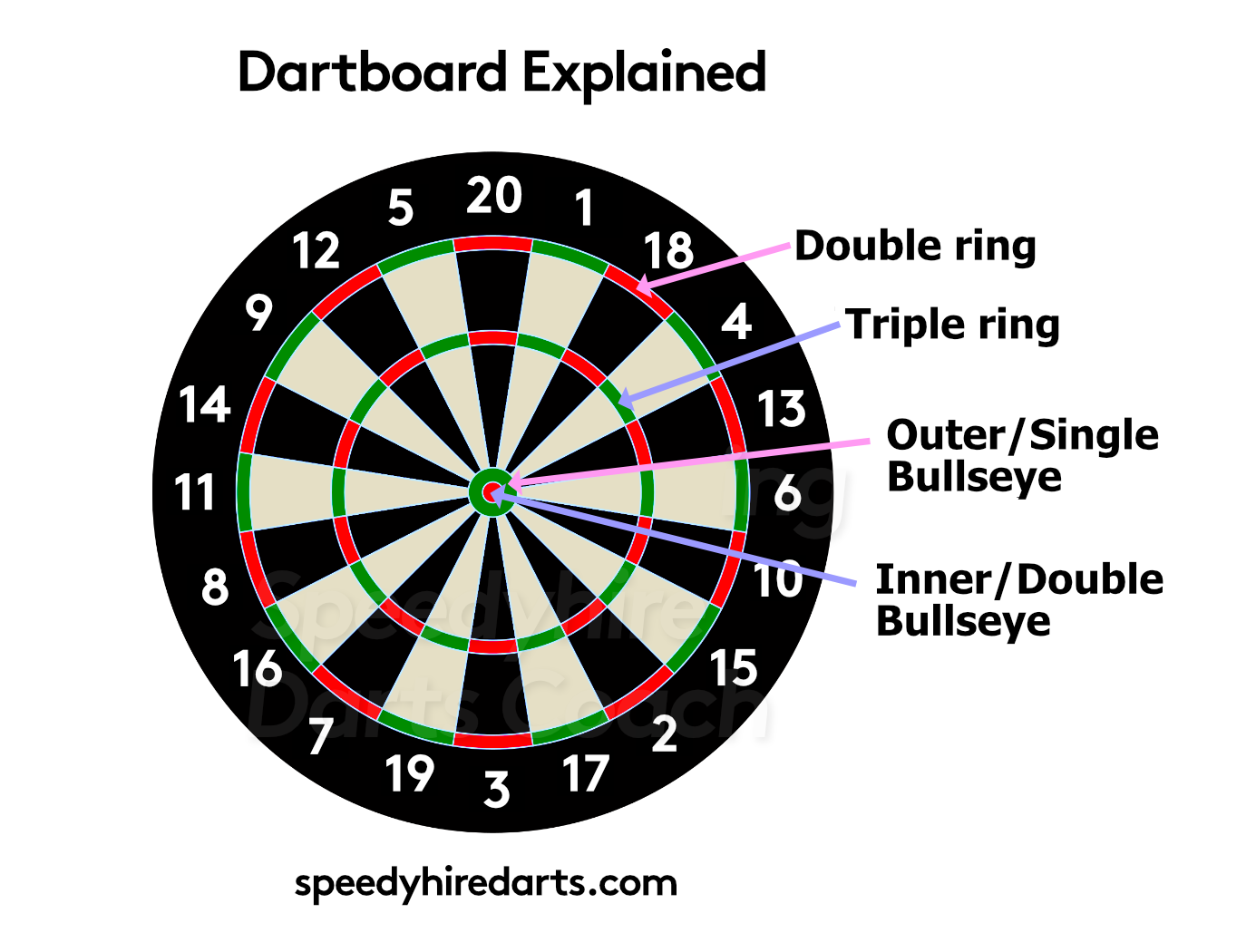
The double rings on a dartboard are crucial for finishing a leg. To win, the last dart must hit a double or the inner bullseye. The inner bullseye scores 50 points and counts as a double finish. The outer bullseye scores 25 points but does not count as a double.
Players must reduce their score exactly to zero. If the final dart misses the double or inner bullseye, the turn is lost. This rule is called “finishing on a double.” Failing to do this means the score returns to what it was before the turn started.
| Finish Type | Points | Counts as Double? |
|---|---|---|
| Double Ring | Varies (double the number hit) | Yes |
| Inner Bullseye | 50 | Yes |
| Outer Bullseye | 25 | No |
Legs And Sets Structure
A leg is a single game in darts. Players start with a set score, usually 501, and take turns throwing three darts each. The goal is to reduce the score to exactly zero.
The final dart must land in a double area or the bullseye. This finishes the leg. The first player to do this wins the leg.
A set is made up of several legs. The player who wins the majority of legs wins the set. For example, in a best-of-five legs set, the first to win three legs takes the set.
Match formats vary. Some matches are played as best of 3, 5, or more sets. Others use a fixed number of legs without sets. The format depends on the tournament or event rules.

Turn Busting Explained
Bust happens when a player’s score goes below zero or they miss the required double to finish. This means the turn does not count, and the player’s score stays the same as before the turn started.
The effects on the score are simple: no points from that turn are added. The player loses the chance to reduce their score this round. The score remains exactly what it was before the bust.
Restarting the turn means the player throws again but from their previous score. The next player then takes their turn normally. Busting can change the flow of the game, often adding tension and excitement.
Scoring Areas On The Board
The dartboard has several important scoring areas. The Single Score Zones are the largest sections. Each is worth the number shown on the board. Landing a dart here adds that number to your score.
The Double Score Rings are thin bands near the outer edge. Hitting these doubles the number shown. For example, a 20 in the double ring scores 40 points.
The Triple Score Rings sit between the single and double rings. They triple the number hit. A dart in the triple 20 zone scores 60 points.
The Bullseye and Outer Bull are in the center. The bullseye (inner circle) scores 50 points. The outer bull scores 25 points. Both are valuable targets for ending the game.
Common Scoring Systems
501 and 301 games are the most popular darts scoring formats. Each player starts with a score of 501 or 301 points. Players throw three darts per turn, subtracting the total scored from their starting number. The goal is to reach exactly zero points. The last dart must land in a double area or the bullseye. If a player scores more than needed to reach zero, it is called a bust. The score does not change, and the next player takes their turn.
Cricket scoring basics focus on hitting numbers 15 through 20 and the bullseye. Players aim to “close” these numbers by hitting each three times. Points are scored by hitting closed numbers after the opponent has not yet closed them. The player with the highest points after all numbers are closed wins the game.
Alternative formats include games like Around the Clock, Killer, and Shanghai. These variations often have different targets and scoring rules but use the same basic dartboard layout. Each format offers unique challenges and fun ways to enjoy darts.
Tips To Improve Scoring
Aiming strategies are key for better scores. Focus on the triple 20 area, the highest scoring spot. Keep your eyes steady and aim small to hit the target more often. Try to throw darts smoothly, not too hard or soft, for better control.
Scoring priorities help plan your throws. Start by hitting high-value targets like triple 20, then move to safer doubles to finish the game. Avoid random throws. Target numbers that help reduce your score fast and set up easy finishes.
Practice drills build consistency. Try throwing only at the triple 20 for 10 turns. Then focus on doubles for the next 10 turns. Use timed rounds to improve speed and accuracy. Regular practice makes your aim sharper and your scoring higher.
Using Scoreboards And Apps
Manual scoring in darts uses a chalkboard or paper to track points. Players write down each score after their turn. This method needs careful attention to avoid mistakes. A scoreboard is often placed near the dartboard for easy viewing. It helps players see their current score clearly and plan their next throws.
Digital scorekeeping tools include electronic dartboards and mobile apps. These tools automatically add and subtract points. They reduce errors and speed up the game. Many apps also offer different game modes and player statistics.
| Benefits of Scoring Apps |
|---|
| Easy to Use: Simple interface for quick scoring. |
| Accuracy: No need to worry about math errors. |
| Game Options: Various dart games in one place. |
| Player Stats: Track progress and improve skills. |

Frequently Asked Questions
How Does The Score Work In Darts?
Players take turns throwing three darts each round. Add the points scored and subtract from the starting score. The goal is to reach exactly zero, finishing on a double or bullseye. If the score goes below zero, the turn is lost, and the previous score remains.
What Are The Basic Rules Of Darts?
Players take turns throwing three darts each. Subtract the total score from 501 or 301. Finish exactly on zero by hitting a double or bullseye. If the score goes below zero, the turn is lost. The first to zero wins the leg or set.
How Does Darts Scoring Work Sets And Legs?
In darts, players compete in legs by reducing their score from 501 to zero. Winning a set requires winning a set number of legs, usually best of five. Each turn, players throw three darts and subtract their score. The final dart must hit a double to win the leg.
Is The Bullseye 50 Or 100?
The bullseye in darts scores 50 points for the inner circle and 25 points for the outer circle.
Conclusion
Darts scoring is simple once you understand the basics. Each player throws three darts per turn. Add the points from all three darts. Subtract this from your current score. The goal is to reach exactly zero points. You must finish by hitting a double or bullseye.
If you go below zero or miss the double, your turn ends with no change. Practice will help you keep track quickly. Now, enjoy playing and scoring with confidence!